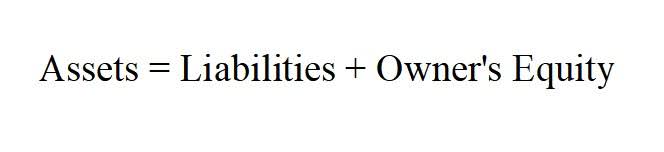
By anticipating these losses, businesses can make more informed financial decisions and better manage their cash flow and working capital. Doubtful accounts represent the amount of money deemed to be uncollectible by a vendor. Adding an allowance for doubtful accounts to a company’s balance sheet is particularly important because it allows a company’s management to get a more accurate picture of its total assets. Most balance sheets present these two accounts separately by showing the gross AR balance and subtracting the allowances to arrive at the outstanding AR balance. This amount represents the amount of cash management actually expects to collect from its customers.

How does AFDA relate to the matching principle in accounting?
- The balance sheet method (also known as the percentage of accounts receivable method) estimates bad debt expenses based on the balance in accounts receivable.
- His expertise in content systems, data accuracy, and web accessibility ensures every guide meets the highest standards.
- The allowance for doubtful accounts provides valuable insights into a company’s financial health, particularly in evaluating credit policies and customer reliability.
- This process removes the uncollectible account from the books without affecting current income.
By recognising these potential risks, businesses can avoid overstating their revenue and provide a more accurate picture of their financial health. This practice is particularly important for organisations that extend credit to customers, as it enables them to manage risks effectively and maintain stakeholder confidence. This comprehensive guide will unravel the mysteries surrounding the allowance method of accounting for uncollectible accounts. By demystifying the https://www.bookstime.com/ accounting allowance for bad debt, we aim to provide clarity and empower you with the knowledge to ensure your financial records truly reflect the collectibility of your receivables. Allowance for uncollectible accounts is a contra asset account on the balance sheet representing accounts receivable the company does not expect to collect.
Strategies to Minimize Bad Debt
At the end of each accounting period, we need to record the expected losses due to uncollectible accounts into the allowance for doubtful accounts on the balance sheet. At the same time, we need to recognize it as an expense during the accounting period by recording the same amount of the expected losses into the bad debt expense on the income statement. The allowance for doubtful accounts is a reduction of the total amount of accounts receivable appearing on a company’s balance sheet. This deduction is classified as a contra asset account, so https://www.hireahackeronline.co/how-to-calculate-annual-income-a-guide/ it is paired with and offsets the accounts receivable line item. The allowance represents management’s best estimate of the amount of accounts receivable that will not be paid by customers.
- If a certain percentage of accounts receivable is typically written off, it’s reasonable to use that percentage as an estimate.
- In this case, a decrease to the Allowance for Doubtful Accounts balance and Allowance for Bad Debt (Exp) is necessary.
- These standards require businesses to estimate uncollectible debts based on reasonable and supportable information.
- For example, writing off a $1,000 balance would involve a $1,000 debit to ADA and a $1,000 credit to AR.
- The applied percentages are usually based on our experiences in business as well as the available industry data (e.g. industry average of customer default) that is publicly obtainable.
- To account for this possibility, businesses create an allowance for doubtful accounts, which serves as a reserve to cover potential losses.
Direct Write-Off Method Explained

For example, say on December 31, 2022, your allowance account shows a credit balance of $2,000. You calculate your allowance using the accounts receivable aging method shown above and decide your allowance should be $5,750. Under the percentage of receivables method, we should use the accounts receivable aging report to determine the allowance for doubtful accounts. This is due to it providing more detailed information about the receivables and making our estimation of allowance for doubtful accounts to be more accurate. For example, we have made a total of $10,000 credit sales during the accounting period. Based on our past experiences and the industry average data, we expect that 3% of total credit sales during the period will become uncollectible accounts.

Key Benefits for Businesses
Companies often leverage automation to streamline the billing and invoicing process, reducing the risk of non-payment. Feedback from the accounts receivable (AR) department is crucial in identifying patterns of non-payment and adjusting the bad debt reserve accordingly. Finally, Emagia’s AI-driven Collections Cloud transforms how overdue accounts are managed. It leverages predictive analytics to identify at-risk accounts early, intelligently segments customers, and orchestrates personalized, multi-channel allowance for doubtful accounts normal balance outreach. This proactive approach significantly improves recovery rates and reduces the need for bad debt write-offs, ultimately leading to a more accurate and optimally sized allowance for doubtful accounts. It relies on historical data, economic forecasts, industry trends, and management judgment.